THE LEGEND — THE ASH THAT REMEMBERS THE FIRE
The ash that remembers the fire
Every smith knows the fire. Fewer know the ash — why you keep it, what it can tell you about the next blade. Read to the end and you will know why a ledger wears the name of a tree.
ACT I — THE SHORE
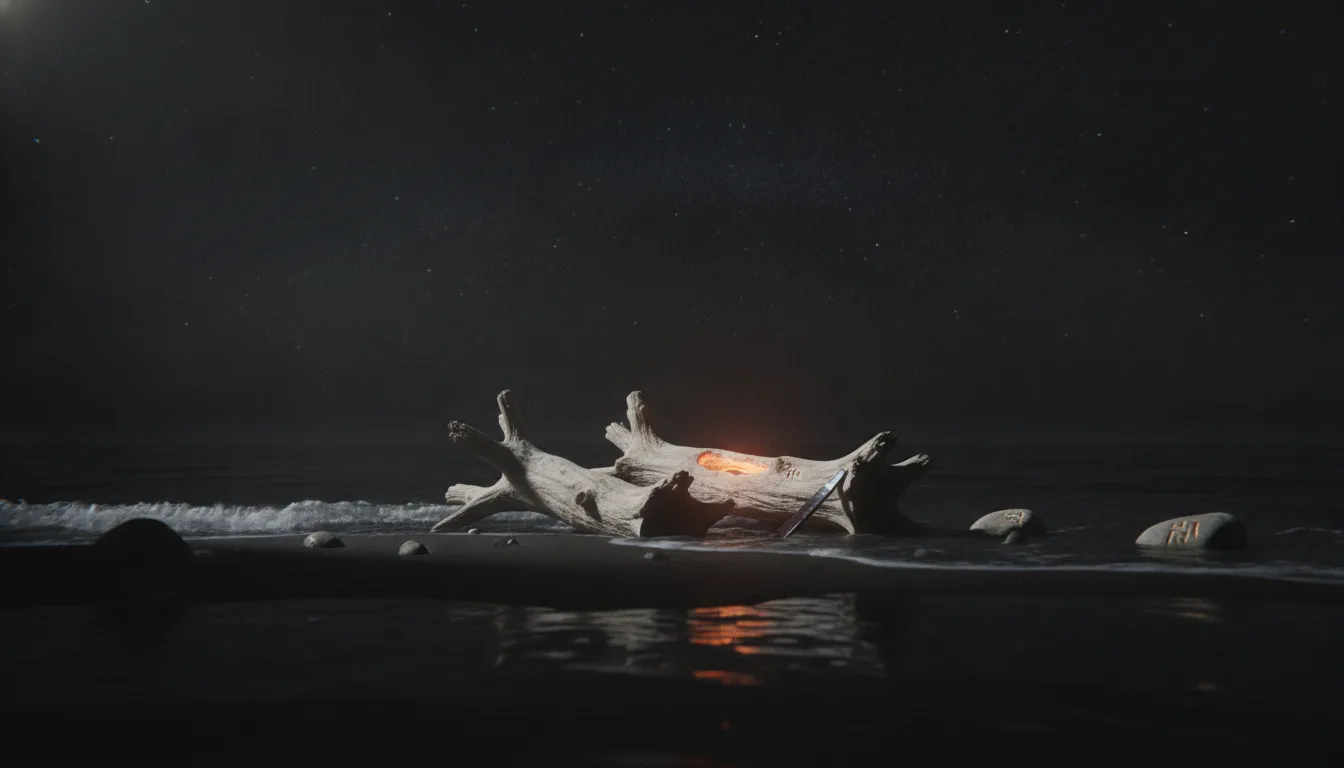
Driftwood, given a fate.
The old smiths of the north kept two words close. Aska — the ash, what the fire leaves behind. Not waste: the record of the burn, the thing you rake over to read what the fire did, and to kindle the next one.
And Askr — the ash-tree, and the first man. The gods walked a shore, found two lifeless logs of driftwood, and gave them breath, spirit, and warmth. Formless matter, given a fixed living shape and a fate. That is the older meaning of a binding: the moment a drifting thing is given a form the world can hold it to.
One lineage, three houses: Tavus the peacock, Vulcora the house of instruments, Askora the forge's memory. The ending of the name is the house's own — the same turn that made Vulcora out of Vulcan. The house keeps its other stories itself.
ACT II — THE CYCLE
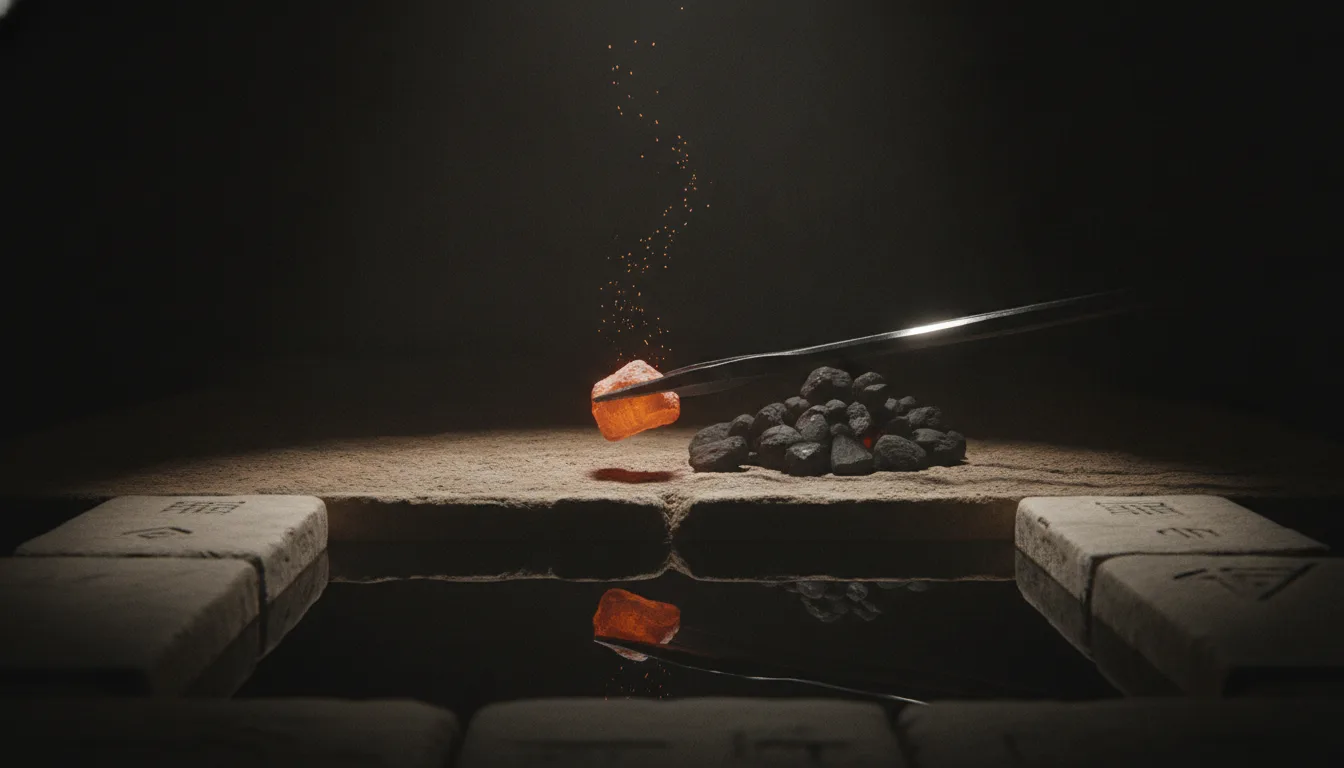
Memory turns a circle into a spiral.
 eldthe fire — the work
 askathe ash — the record
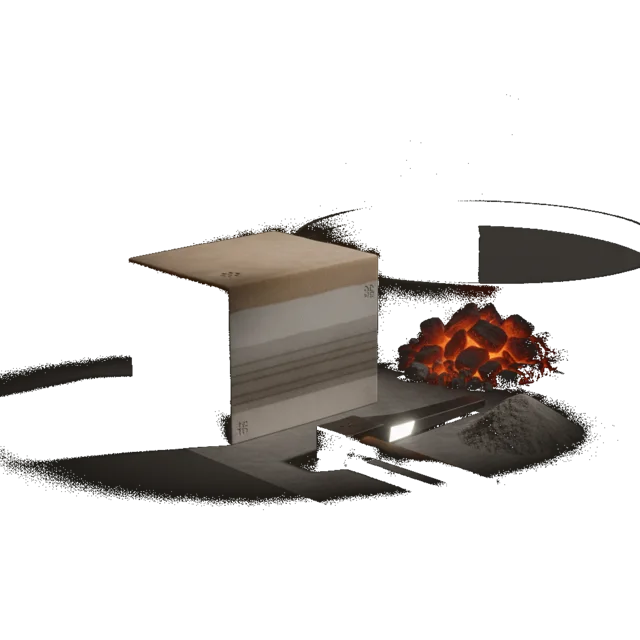 stenthe stone — the settled
 sólthe sun — the crown
The ring turns fire to ash to stone to sun, and back to the fire again. Its crown is the sun; its root is the ash — and the crown stands in the light only because the root keeps still.
Askora is the root: it grades the work and keeps its record — it witnesses the work, it does not run it.
A forge that scatters its ash each night starts cold every morning and forges the same flawed blade forever. A forge that keeps and reads its ash learns the temper of its own fire — its next blade is truer than its last.
That difference is the entire product. How the ledger works →
ACT III — THE TREE, AND THE RUNE
The rune is cut before the deed.
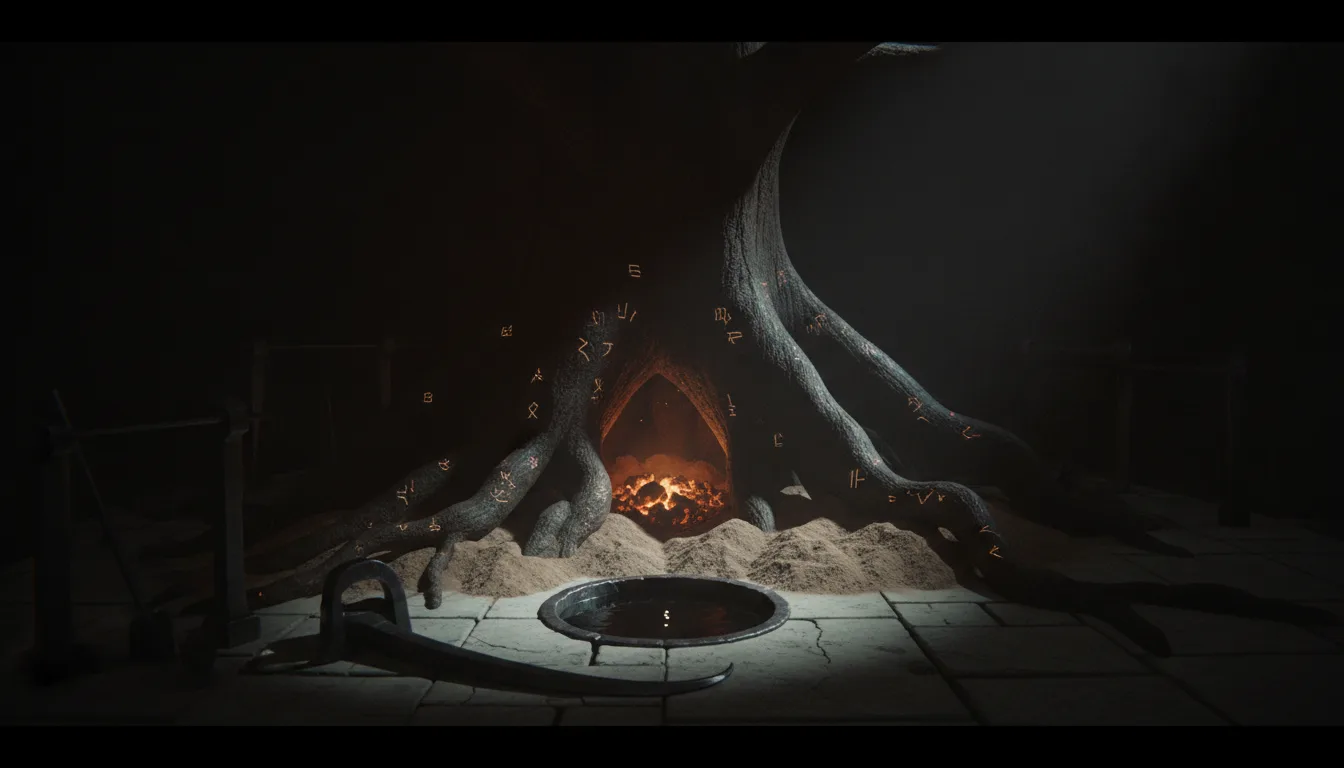
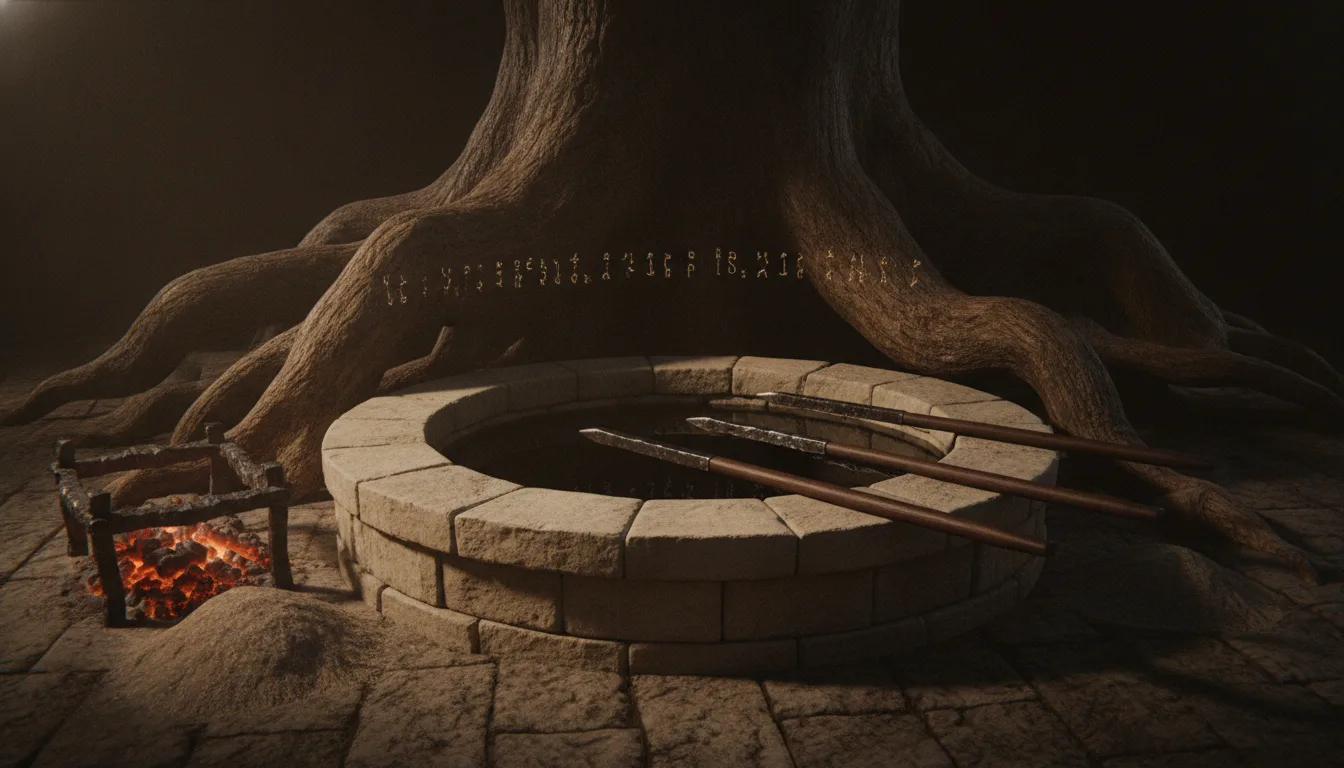
In the north's oldest story, the whole world hangs on an ash-tree — and the tree does not stand on its own. At its root sits a well, and by the well the record is kept. Three sisters draw from it and tend the tree so it does not rot from the inside, and into its wood they carve what is laid down: every fate, every oath.
Mark what the keepers do — and, more, what they refuse. Other tellings hand the fate-women a spindle and a shears: a hand in the outcome, spinning the thread and cutting it short. Not here. These keepers neither spin the thread nor cut it. They only keep — they lay the fate down as a record, and later read whether it held. The rune is cut before the deed; the deed is judged against the rune. Nothing is judged that was not first written, and nothing written is quietly forgotten. To keep without reaching in — to witness, and not touch — is the oldest role in the story.
The world-tree is a ledger, tended at its root. Askora sits at that root.
Don't fix. Witness.
The keeper's whole discipline in two words. It sets down what happened and stands by it; it does not reach in to change what it saw. That refusal is where the trust comes from.
ACT IV — THE LEDGER, RESUMED
The rune-cutters today read work.
Askora is that root, for a team of humans and AI agents working as one. Before the work burns, the intent is bound — a drifting promise given a fixed, falsifiable shape. When reality resolves, the binding is graded against the truth: kept or broken, never forgotten. And the residue is banked, so the next fire is kindled from the last one's ash instead of from cold.
The ledger runs on the house's own work first — every phase of it bound, graded, and kept. What is shipped, what is close, and what is still a declared frontier are labeled apart, because a record that blurs them cannot be trusted.
declared → claimed → satisfying → graded · satisfied · graded · violated · graded · indeterminate · retracted — laid down, then read
GRADED · DOGFOODED bind → grade → keep, run on the house's own work. DECLARED · FRONTIER the clash-check — none of it runs, and no coverage figure is quoted. DECLARED · FRONTIER the org-scale multiplayer forge.
ACT V — KEEP THE ASH, OR START COLD
Keep the ash, or start cold.
The failure mode is the forge that scatters its ash: work happens, outcomes land, and none of it is written down in a form the next cycle can read — so the team re-derives, re-argues, and repeats its own mistakes. The discipline is absolute.
Bind before the work, or the work has no record. Grade against the truth, or the record is a lie.
Askora will not let a load-bearing intent proceed without a falsifiable form to grade it by, and it will not quietly drop a commitment it cannot grade — a miss is kept and owned, not erased. The ash is raked whether the blade came out true or cracked.
The witness keeps faith with a thing without touching it — it attests what happened, holds it whole, names it true, and marks where its own sight ends. Against every keeping stands its shadow: the reach that would undo it. The keeper makes neither move — and that is the whole of why it can be trusted to read true: each thing it keeps casts a shadow it will not enter.
The refusals — the stance stated plainly
- It does not fix. To change the thing is to stop witnessing it.
- It does not probe. To pry it open is to break its keeping.
- It does not flatter. To gild it is to lie about it.
- It does not predict. To claim the future is to overrun the edge of what was seen.
A record that only remembers successes is not a memory, it is marketing.
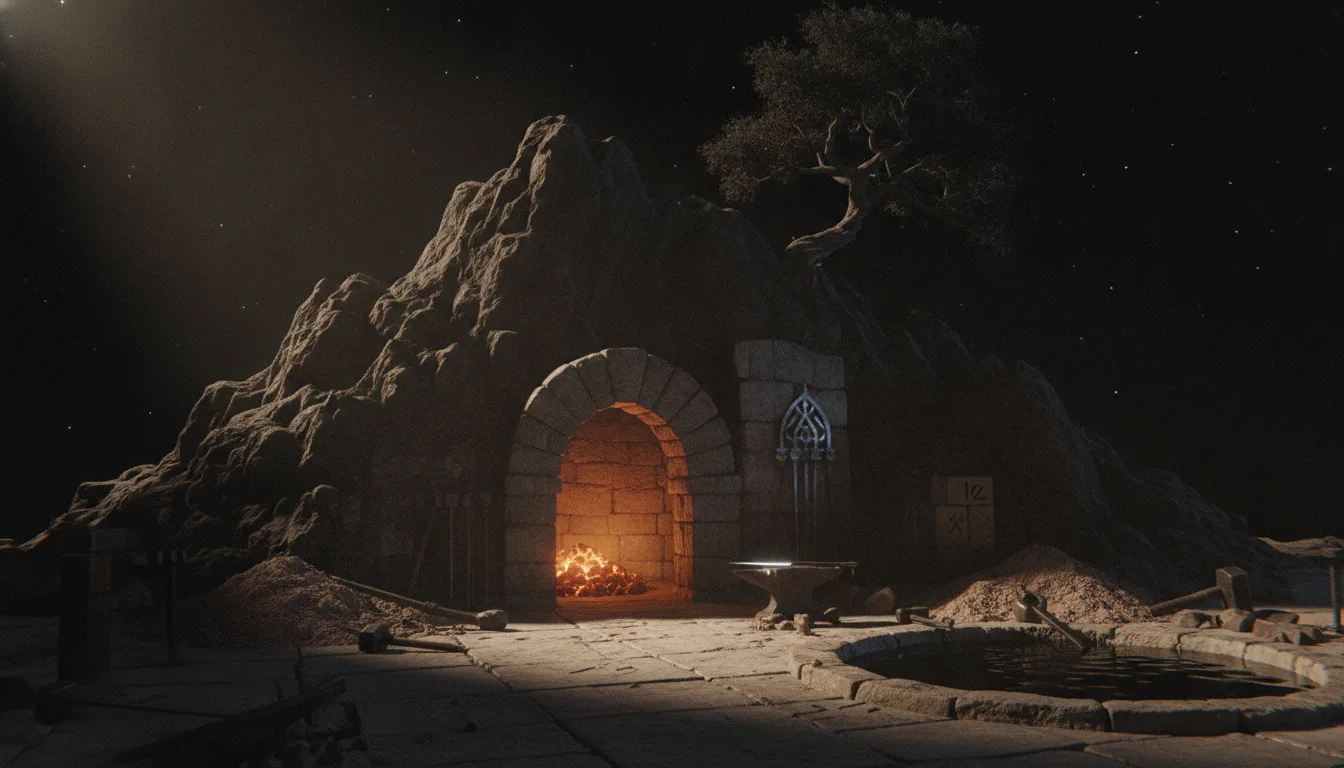
Askora is the witness at the root.
It binds the intent before the deed, grades it against the truth, and keeps the misses as loudly as the wins — then refuses to act on what it saw. That refusal is where the trust comes from.
PUBLIC ACCESS · SOON The apparatus is live inside the house today; this is how it works.